





BLOGSDETAILS
Prefabricated Foldable House Foundation Requirements and Site Preparation
Author:Mingkai Time:2026-09-13 22:12:24 Click:117
Prefabricated Foldable House Foundation Requirements and Site Preparation
The construction industry is undergoing a transformation, driven by the need for faster, more sustainable building solutions. At the forefront of this revolution is the prefabricated foldable house, a modular building system that delivers exceptional value without compromising on quality or comfort. This article provides an in-depth look at this innovative product.
An Overview of Prefabricated Foldable House Technology
The technology behind the prefabricated foldable house represents years of research and development in modular construction systems. Every component is designed for maximum compatibility and ease of assembly, using standardized connections and fittings that ensure structural stability. The engineering team has conducted extensive testing to validate performance under various load conditions, including wind resistance, seismic activity, and snow loading.
Advanced manufacturing techniques, including CNC cutting and robotic welding, ensure precise component fabrication and consistent quality across every unit. The production process incorporates rigorous quality control checkpoints at each stage, from raw material inspection to final assembly testing. This commitment to engineering excellence results in a product that meets or exceeds international building standards and certifications.
Real-World Applications and Benefits
The benefits of the prefabricated foldable house extend beyond its practical applications to include significant economic and environmental advantages. From a cost perspective, these modular units typically cost 30-50% less than comparable traditionally constructed buildings, with the added benefit of predictable pricing and no hidden construction costs. The reduced construction time also means lower financing costs and faster return on investment for commercial projects.
Environmentally, the factory-controlled production process generates significantly less waste than traditional construction, with material waste reduced by up to 70%. The energy-efficient design and high-quality insulation result in lower ongoing energy consumption for heating and cooling. Furthermore, these units are fully recyclable at the end of their service life, with steel components being melted down and reused in new products, contributing to a circular economy approach to construction.
Installation and Maintenance Best Practices
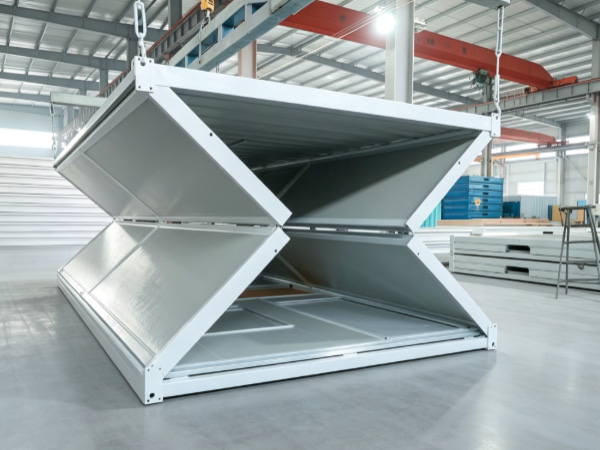
Proper installation is critical to ensuring the long-term performance and durability of the prefabricated foldable house. Before installation, the site should be properly prepared with a level, well-drained foundation. Depending on the application and local building codes, foundation options may include concrete slabs, steel skids, or adjustable jack stands. It is essential to ensure that the foundation can support the weight of the unit and any additional loads, such as snow or wind forces. Site access should be planned to accommodate delivery vehicles and any necessary lifting equipment.
Regular maintenance is essential for maximizing the service life of your modular building. We recommend conducting quarterly inspections of the exterior, checking for any signs of corrosion, damage to the paint or coating, and ensuring that all seals and gaskets are in good condition. The roof should be inspected annually and cleared of any debris that could trap moisture. Interior maintenance includes regular cleaning, checking electrical connections, and ensuring that windows and doors operate smoothly. By following these maintenance guidelines and addressing any issues promptly, you can expect your prefabricated foldable house to provide reliable service for 20 years or more.
Conclusion
The prefabricated foldable house represents a compelling solution for anyone seeking flexible, cost-effective, and sustainable building options. With its rapid deployment capability, durable construction, customizable design, and wide range of applications, this modular building system offers significant advantages over traditional construction methods. Whether you are planning a temporary facility or a permanent structure, this innovative solution delivers exceptional value and performance.
As the construction industry continues to evolve, modular and prefabricated solutions like the prefabricated foldable house will play an increasingly important role in meeting global housing and infrastructure needs. By embracing these innovative building technologies, we can create more efficient, sustainable, and affordable built environments for generations to come.
References (Google Scholar)
 HOT PRODUCT
 CONTACT US