





BLOGSDETAILS
What are flat pack container houses used for?
Author:Mingkai Time:2026-09-09 09:36:02 Click:186
What Are Flat Pack Container Houses Used For?
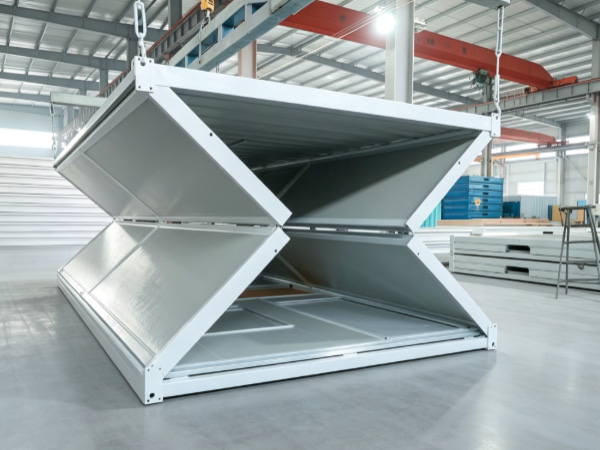
A flat pack container house is a type of modular building that is designed to be manufactured, packed into a compact transportation configuration, transported to the project site, and assembled when required.
Because flat pack container houses can be transported efficiently and assembled relatively quickly, they are widely used for temporary accommodation, construction sites, offices, worker housing, classrooms, camps, emergency facilities, and other applications.
Unlike conventional buildings that are constructed mainly on site, a flat pack container house uses a modular construction approach. The main structural components are manufactured in advance and then assembled at the destination.
What Are Flat Pack Container Houses Used For?
Flat pack container houses can be used for many different applications. Their modular design allows the same basic structure to be configured for different purposes.
The most common applications include:
Construction site offices
Worker accommodation
Temporary housing
Modular offices
Site management facilities
Temporary classrooms
Emergency accommodation
Mining camps
Remote project facilities
Military and field camps
Temporary commercial spaces
Storage and service facilities
The exact application depends on the building configuration, local regulations, climate, structural requirements, and internal layout.
1. Construction Site Offices
One of the most common uses of a flat pack container house is as a construction site office.
Construction projects often need offices for project managers, engineers, supervisors, security personnel, and other site staff.
A modular office can be assembled relatively quickly without constructing a permanent building.
The internal layout can include:
Workstations
Meeting rooms
Management offices
Storage areas
Reception areas
Break rooms
As the construction project changes, additional modular units can potentially be added or relocated according to the project requirements.
2. Worker Accommodation
Flat pack container houses are also widely used for worker accommodation.
Large construction, infrastructure, mining, energy, and industrial projects may require temporary accommodation close to the work site.
Flat pack modular buildings can be configured as:
Dormitory rooms
Bedrooms
Kitchens
Bathrooms
Dining rooms
Recreation areas
Laundry rooms
Multiple units can be arranged together to form a complete temporary worker camp.
3. Temporary Housing
Another important application is temporary housing.
Flat pack container houses can provide accommodation when conventional housing is not immediately available or when buildings are required for a limited period.
They can be used for temporary residential projects, relocation programs, remote communities, and other situations where fast-deployment housing is required.
The final suitability for residential use depends on insulation, ventilation, structural safety, fire protection, electrical systems, plumbing, and local building regulations.
4. Emergency and Disaster Relief
Flat pack container houses can also be used for emergency accommodation.
After natural disasters or other emergencies, communities may require temporary buildings while permanent facilities are being repaired or reconstructed.
Modular units can be transported to the affected area and assembled to provide temporary:
Accommodation
Medical spaces
Offices
Classrooms
Storage rooms
Community facilities
The compact transportation configuration can be particularly useful when a large number of units need to be delivered to a project location.
5. Temporary Classrooms
Educational facilities can use flat pack container houses when additional classroom space is needed quickly.
Schools may require temporary classrooms because of:
Increasing student numbers
School renovation
Building expansion
Emergency situations
Temporary relocation
Several modular units can be combined to create classrooms, staff rooms, storage areas, and other educational spaces.
The design should comply with applicable local requirements for fire safety, ventilation, lighting, accessibility, and occupancy.
6. Mining and Remote Project Camps
Mining, oil and gas, energy, infrastructure, and other remote projects often require accommodation and operational facilities in locations where conventional construction can be difficult.
Flat pack container houses can be used to create temporary or semi-permanent project camps.
Possible facilities include:
Worker dormitories
Site offices
Dining halls
Kitchens
Bathrooms
Storage rooms
Recreation areas
Medical rooms
The modular format can simplify transportation and allow project facilities to be expanded as workforce requirements change.
7. Modular Offices
Flat pack container houses can also be configured as independent office buildings.
They may be used for:
Temporary business offices
Site offices
Security offices
Sales offices
Project management offices
Reception areas
Remote workspaces
Interior partitions, doors, windows, electrical systems, lighting, flooring, and insulation can be configured according to the intended use.
8. Temporary Commercial Spaces
Some businesses use modular buildings for temporary commercial applications.
Depending on local regulations and the building design, flat pack container structures can be configured as:
Small retail spaces
Ticket offices
Service centers
Information booths
Cafés
Exhibition spaces
Temporary shops
Their modular nature can allow businesses to establish temporary facilities without committing to a conventional permanent building.
9. Security and Guard Houses
Smaller flat pack container units can be used as security or guard houses.
They can provide a dedicated enclosed space for security personnel at:
Construction sites
Industrial facilities
Warehouses
Parking areas
Residential developments
Temporary camps
A compact modular building can provide shelter while requiring relatively little site construction work.
10. Storage and Service Facilities
Flat pack container structures can also be used for storage and service purposes.
Depending on the internal configuration, they can provide space for:
Tools
Construction materials
Equipment
Spare parts
Site supplies
Maintenance operations
For industrial and construction projects, modular storage facilities can be installed close to the area where materials or equipment are needed.
11. Temporary Healthcare Facilities
Flat pack modular buildings can also be configured for certain temporary healthcare applications.
Possible uses include:
Temporary medical rooms
Consultation spaces
Medical support facilities
Staff accommodation
Temporary clinics
Healthcare applications require additional consideration of hygiene, ventilation, accessibility, electrical systems, fire safety, and applicable healthcare regulations.
The building specification should therefore be selected according to the actual healthcare application.
12. Military and Field Camps
Modular buildings are also suitable for temporary field facilities where rapid deployment and flexible site planning are important.
Depending on the design and applicable regulations, flat pack container houses can be configured as accommodation units, offices, storage areas, kitchens, dining facilities, or other support buildings.
Their modular structure can allow multiple units to be arranged into larger temporary facilities.
Why Are Flat Pack Container Houses Suitable for These Applications?
The main reason is their modular construction and compact transportation design.
Compact Transportation
Flat pack components can be packed efficiently for transportation, helping optimize shipping and logistics.
Fast Assembly
Major components are manufactured in advance, which can reduce the amount of traditional construction required at the project site.
Flexible Layout
Multiple units can be arranged in different configurations according to the project requirements.
Easy Expansion
Additional units can potentially be added when more accommodation, office, or service space is required.
Relocation Potential
Depending on the structural design, some modular buildings can be dismantled and relocated to another project.
Reusable Components
When properly designed and maintained, structural components can potentially remain in service for multiple applications.
Can Flat Pack Container Houses Be Used as Permanent Buildings?
A flat pack container house can be used for different durations, but whether it can legally serve as a permanent building depends on the specific product design and local building regulations.
The term "container house" does not automatically determine whether a building is temporary or permanent.
For long-term applications, buyers should consider:
Structural design
Foundation
Insulation
Waterproofing
Fire protection
Electrical systems
Plumbing
Ventilation
Energy performance
Local building codes
A product designed only for temporary use should not automatically be treated as a permanent residential building without verifying its technical specifications and regulatory compliance.
Flat Pack Container House vs. Traditional Construction
Flat pack container houses and conventional buildings serve different purposes.
Traditional construction can provide greater architectural flexibility and may be more appropriate for many permanent buildings.
Flat pack modular construction can be advantageous when the project requires:
Fast deployment
Temporary accommodation
Relocation
Modular expansion
Efficient transportation
Reduced on-site construction
For short-term or project-based applications, the modular approach can provide greater flexibility.
Can Flat Pack Container Houses Be Combined?
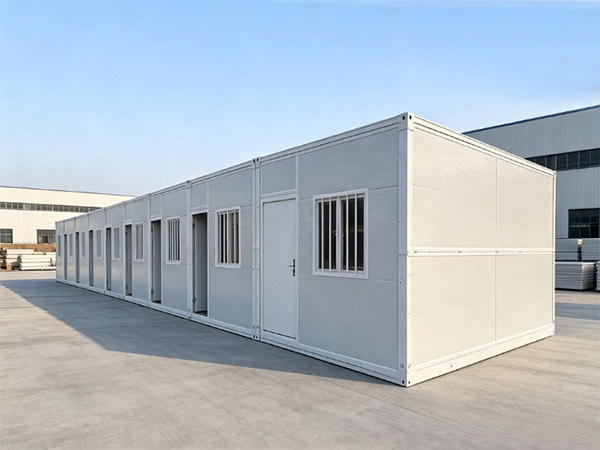
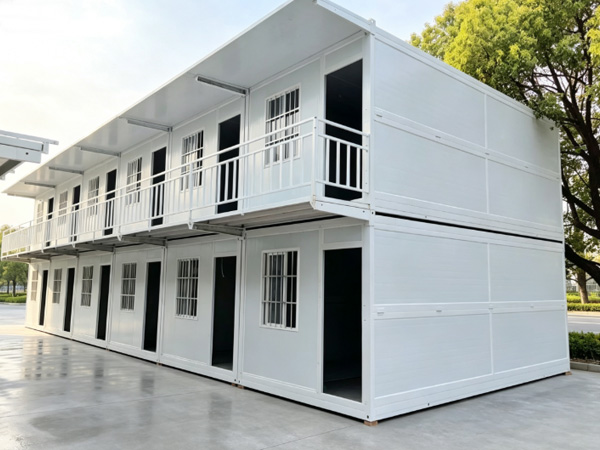
Yes. Multiple flat pack container units can often be connected or arranged together to create larger buildings, depending on the structural system.
For example, several units can form:
Worker accommodation camps
Office complexes
Temporary schools
Construction facilities
Site camps
Commercial facilities
Units can potentially be arranged side by side, in rows, or in other layouts depending on the design.
When combining multiple modules, structural connections, fire safety, access, utilities, drainage, and local building regulations need to be considered.
Are Flat Pack Container Houses Reusable?
Many flat pack container houses can potentially be reused or relocated when their structural components remain in suitable condition.
For example, a modular office used at one construction project may later be dismantled and installed at another project.
This can extend the useful life of the building and reduce the need to manufacture a completely new structure for every temporary project.
However, reuse depends on structural durability, connection design, transportation conditions, installation methods, maintenance, and environmental exposure.
What Should Buyers Consider Before Choosing a Flat Pack Container House?
The intended application should determine the building specification.
Before purchasing, buyers should consider:
Intended use
Number of occupants
Building size
Internal layout
Transportation dimensions
Installation method
Foundation requirements
Wall and roof materials
Insulation performance
Waterproofing
Fire safety
Electrical configuration
Plumbing requirements
Local building regulations
Climate and environmental conditions
Expected service life
Maintenance requirements
Potential relocation and reuse
A good modular building solution should be selected according to the complete project requirements rather than simply choosing the lowest initial price.
Conclusion
Flat pack container houses are used for a wide range of temporary, modular, and relocatable building applications. Common uses include construction site offices, worker accommodation, temporary housing, emergency shelters, classrooms, mining camps, remote project facilities, security rooms, storage facilities, and temporary commercial spaces.
Their main advantages come from their modular construction, compact transportation configuration, relatively fast assembly, flexible layout, and potential for relocation and reuse.
For construction companies, project developers, humanitarian organizations, and businesses that need flexible buildings, a flat pack container house can provide a practical alternative to conventional on-site construction.
The most suitable configuration depends on the intended application, local climate, transportation conditions, installation requirements, building regulations, and expected service life.
Academic References
The following academic publications can be searched through Google Scholar for research related to flat pack and modular container housing, prefabricated buildings, modular construction, reuse, and life-cycle performance.
Hachem-Vermette, C., Dara, C., & Assefa, G. (2019). Life cycle assessment and life cycle costing of container-based single-family housing in Canada: A case study. Building and Environment, 163, 106332.
DOI: 10.1016/j.buildenv.2019.106332.Satola, D., Kristiansen, A. B., Houlihan Wiberg, A., Gustavsen, A., Ma, T., & Wang, R. Z. (2020). Comparative life cycle assessment of various energy efficiency designs of a container-based housing unit in China: A case study. Building and Environment, 186, 107358.
DOI: 10.1016/j.buildenv.2020.107358.Cambier, C., Galle, W., & De Temmerman, N. (2021). Expandable Houses: An Explorative Life Cycle Cost Analysis. Sustainability, 13(12), 6974.
DOI: 10.3390/su13126974.Zheng, B., Yang, Y., Chi, H.-L., Luk, C., & Chan, A. (2025). Development of a BIM-based application for visualizing the reuse and recycling potential of modular building systems. Journal of Building Engineering, 105, 112500.
 HOT PRODUCT
 CONTACT US